

Your Protein Bar Manufacturing Guide
What's actually in your protein bar (and why it matters)
Protein bars have come a long way from chalky, post-gym afterthoughts. The best ones taste great, hold their shape, and fit into a normal day — whether that's breakfast on the go, an afternoon pick-me-up, or fuel before a long hike.
If you've ever wondered what's really in your favorite bar, here's a friendly look behind the wrapper.
The five ingredients that build a bar
Every protein bar comes down to a balance of five things.
The protein
This is the heart of the bar. It shapes the texture, how it tastes, and how much protein you actually get per bite. It's also the ingredient that does the most work for your body.
Binders
Think tapioca syrup, brown rice syrup, honey. These are what keep the bar from falling apart in your bag. Too little and you've got a crumbly mess. Too much and it turns into a brick.
Fats and oils
Nut butters, cocoa butter, coconut oil. These are why a good bar feels rich and satisfying instead of dry. They also help lock in freshness.
Carbs and fiber
Oats, dates, crispy rice, pea fiber. These add the chew, the crunch, and the staying power that keeps you full.
The fun stuff
Chocolate coatings, sea salt, vanilla, berries, cookie pieces. The reason you actually want to eat the bar.
Read: Crunchy, Neutral & Protein-Packed: Pea Protein Crisps
How protein bars actually come together
Curious how a bar goes from raw ingredients to the one in your pantry? Here's the short version.
1. Dry ingredients mix first
Protein powder, fiber, and any dry add-ins (like chocolate chips or oats) get blended together evenly.
2. Wet ingredients get added
Syrups and oils are warmed and folded in. This is where the dough comes together.
3. Shaping and cutting
The dough gets pressed into molds or rolled out and sliced into bars.
4. Cooling (and coating, if there is one)
The bars cool down and firm up. If there's a chocolate coating, this is where it happens.
5. Wrapping
Each bar gets sealed up to stay fresh until you're ready for it.
Why some bars taste better than others
If you've ever bitten into a bar that tasted weirdly bitter or beany — or felt like cardboard — there are usually a few culprits.
Off flavors
Plant proteins sometimes get a bad rap for tasting earthy or bitter. The truth: that mostly comes down to how the protein was sourced and processed. Clean, carefully processed pea protein tastes neutral, which lets the actual flavors of the bar shine through.
Texture troubles
Dry, crumbly, or rock-hard bars usually mean something was off in the recipe — not enough binder, or a protein that didn't hold moisture well. Good pea protein binds beautifully without needing a ton of added syrup.
Big protein numbers without a long ingredient list
Getting 20+ grams of protein into a bar while keeping the ingredient list short is genuinely hard. Higher-quality proteins do more with less, which means fewer fillers and a cleaner label.
Where the protein comes from
This one matters more than people realize. Proteins grown and processed by the same supplier — from seed to powder — tend to be more consistent batch to batch. That means the bar you love today tastes like the bar you'll love next month.
Take a tour: Inside the Largest U.S. Pea Processing Plant
Pea protein vs. rice vs. whey: what's the difference?
If you've stood in the bar aisle squinting at labels, here's a quick breakdown.
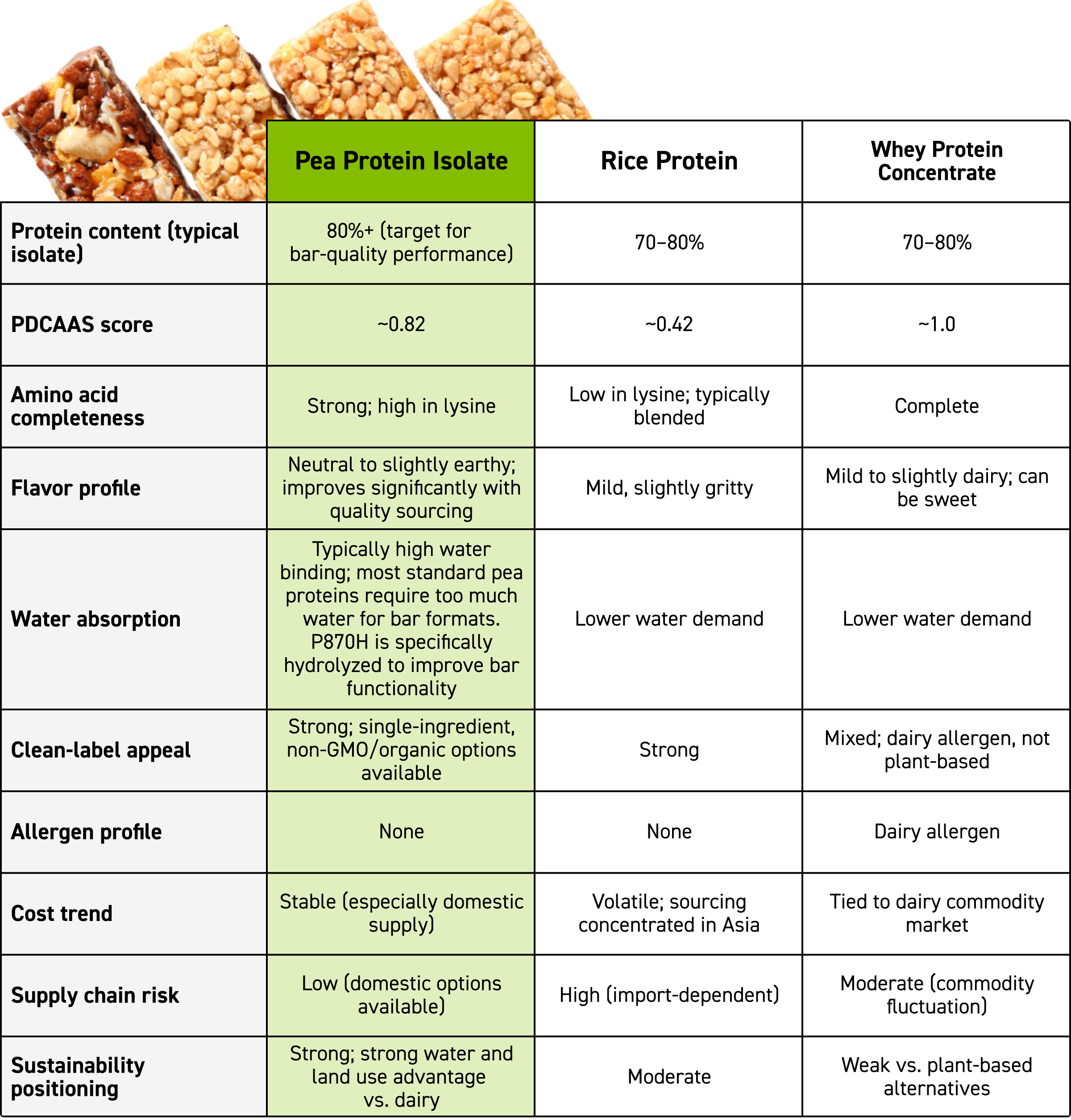
Whey is a dairy-based protein. Great profile, but off the table if you're dairy-free or plant-based.
Rice protein is plant-based and gentle, but it's lower in protein per scoop, so you often need more of it (which can make bars heavier and starchier).
Pea protein hits a sweet spot. It's plant-based, allergen-friendly, naturally high in protein, and covers all the essential amino acids your body needs. When it's done well, it tastes clean and works in almost any flavor — chocolate, vanilla, peanut butter, berry, you name it.
Want a deeper dive? Check out our Plant-Based Protein vs. Whey comparison.
What makes a great pea protein bar
If you're shopping for bars and want to spot a good one, here's what to look for:
A real protein number
Aim for bars with at least 10–20 grams of protein, depending on what you need it for. Higher-quality pea protein gets you there without a mile-long ingredient list.
A short, recognizable ingredient list
The fewer mystery ingredients, the better.
Where it's grown matters
Look for brands that talk openly about where their protein comes from. Domestically grown peas, processed by the same company that grows them, tend to be cleaner and more consistent.
Testing you can trust
Reputable brands test for heavy metals and share the results. It's a small thing that says a lot about how the company operates.
The bottom line: a great protein bar isn't magic. It's good ingredients, sourced well, made with care. Once you know what to look for, finding bars you genuinely enjoy gets a whole lot easier.